-
Getting Started
-
Background1 Topic
-
Introduction to Propensity Scores2 Topics2 Quizzes
-
Estimating and Assessing the Propensity Score4 Topics
-
Applying the Propensity Score5 Topics
-
High-Dimensional Propensity Scores2 Topics
-
Applying the High-Dimensional Propensity Score3 Topics
-
References
-
Additional Resources

Covariate selection
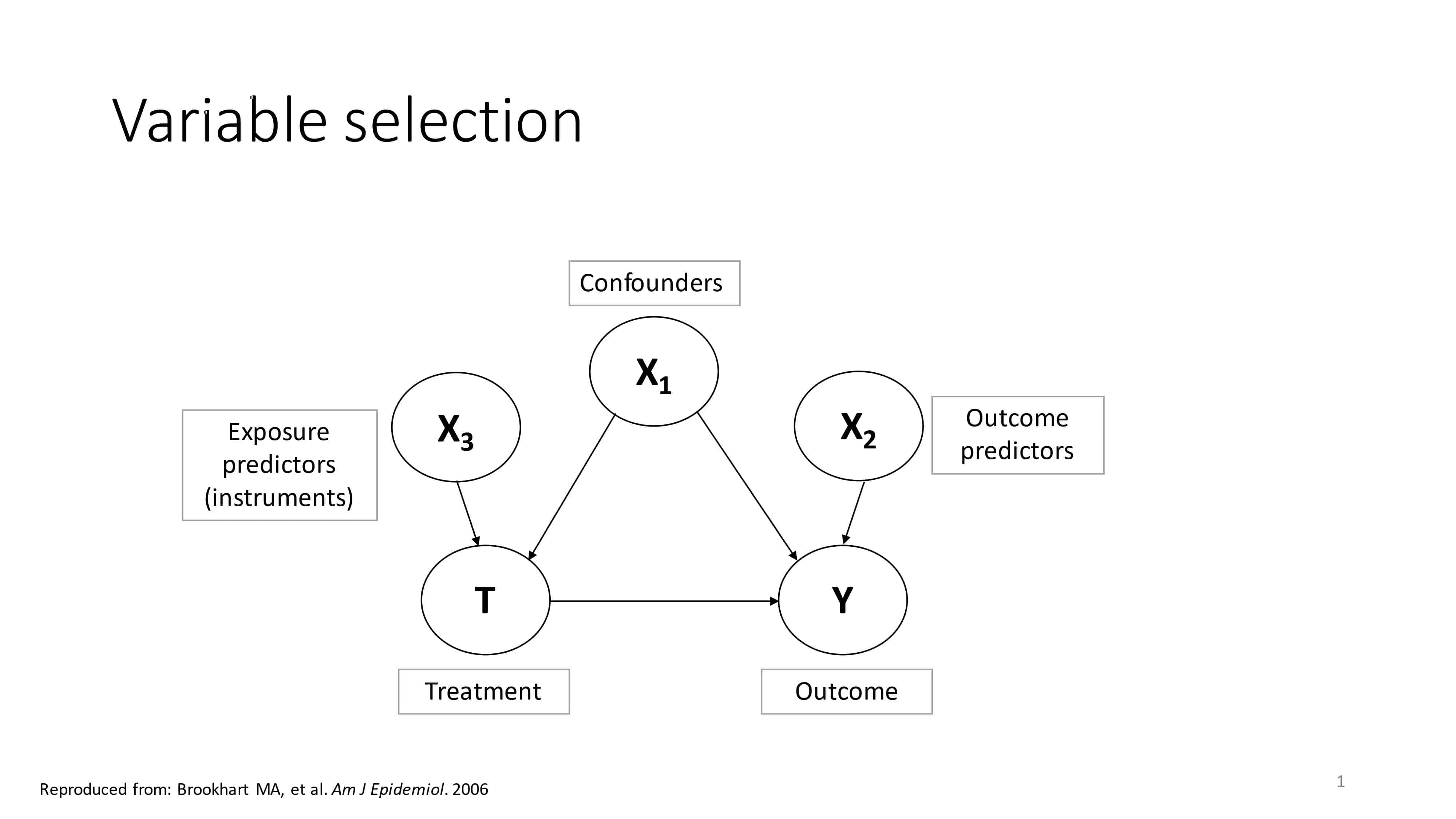
The actual process of creating propensity scores is fairly straightforward and is described above. However, deciding what baseline covariates should be included can sometimes be a tedious process. There are two main methods: a researcher-based approach and an automated approach. In the researcher-based approach, the researcher chooses which baseline covariates to include based on previous literature and expert knowledge. The automated approach is called high dimensional propensity scores and will be introduced in Section 5 of this module. There are generally five types of variables to select from: confounders, outcome predictors, exposure predictors, mediators and colliders.
Variables for covariate selection
Confounders (variables independently associated with both the exposure and the outcome without being on the causal pathway) should be included as this is the main purpose of propensity scores.
Outcome predictors are also recommended to be included. While they are not confounders and including them will not reduce bias, it does reduce the estimate variance.
In contrast, the inclusion of exposure predictors (i.e., instruments) increases both bias and variance and thus exposure predictors should not be included in propensity score estimation. An exposure predictor is not a confounder as it’s not associated with the outcome. An example is provider preference: physician X prefers prescribing treatment A and physician Y prefers prescribing treatment B. In this example, the provider (physician) can predict the assigned treatment, but it does not affect the outcome. Remember that the goal of the propensity score is to reduce confounding bias, thus even though a propensity score measures probability of receiving a treatment, we’re interested in variables that are associated with the outcome as those can contribute to confounding.
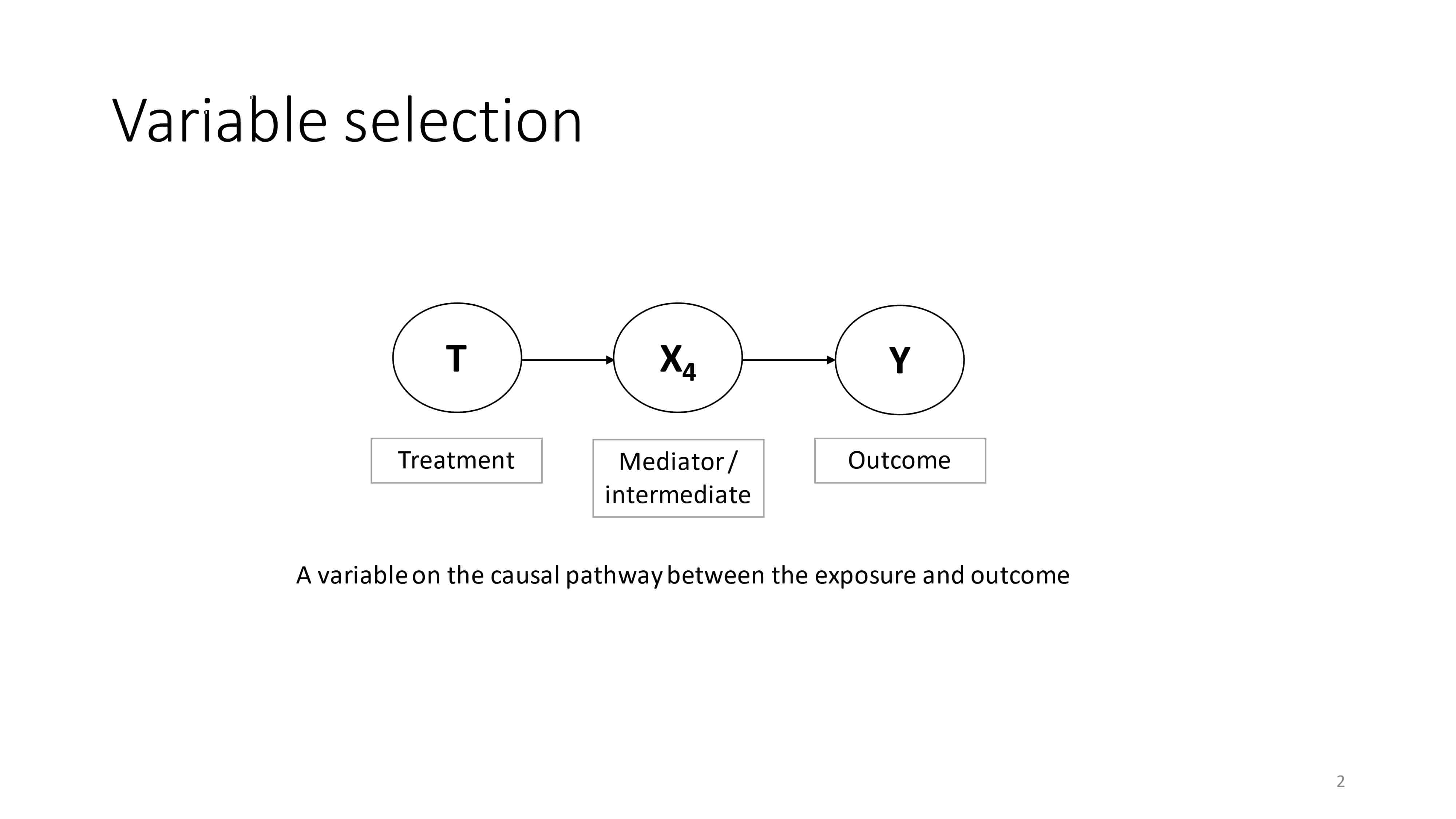
A mediator is a variable that exists on the causal pathway between the exposure and outcome. It’s not recommended to include mediators in propensity score estimation unless we are only interested in measuring the direct effect of the treatment on the outcome that is not mediated through this mediator.
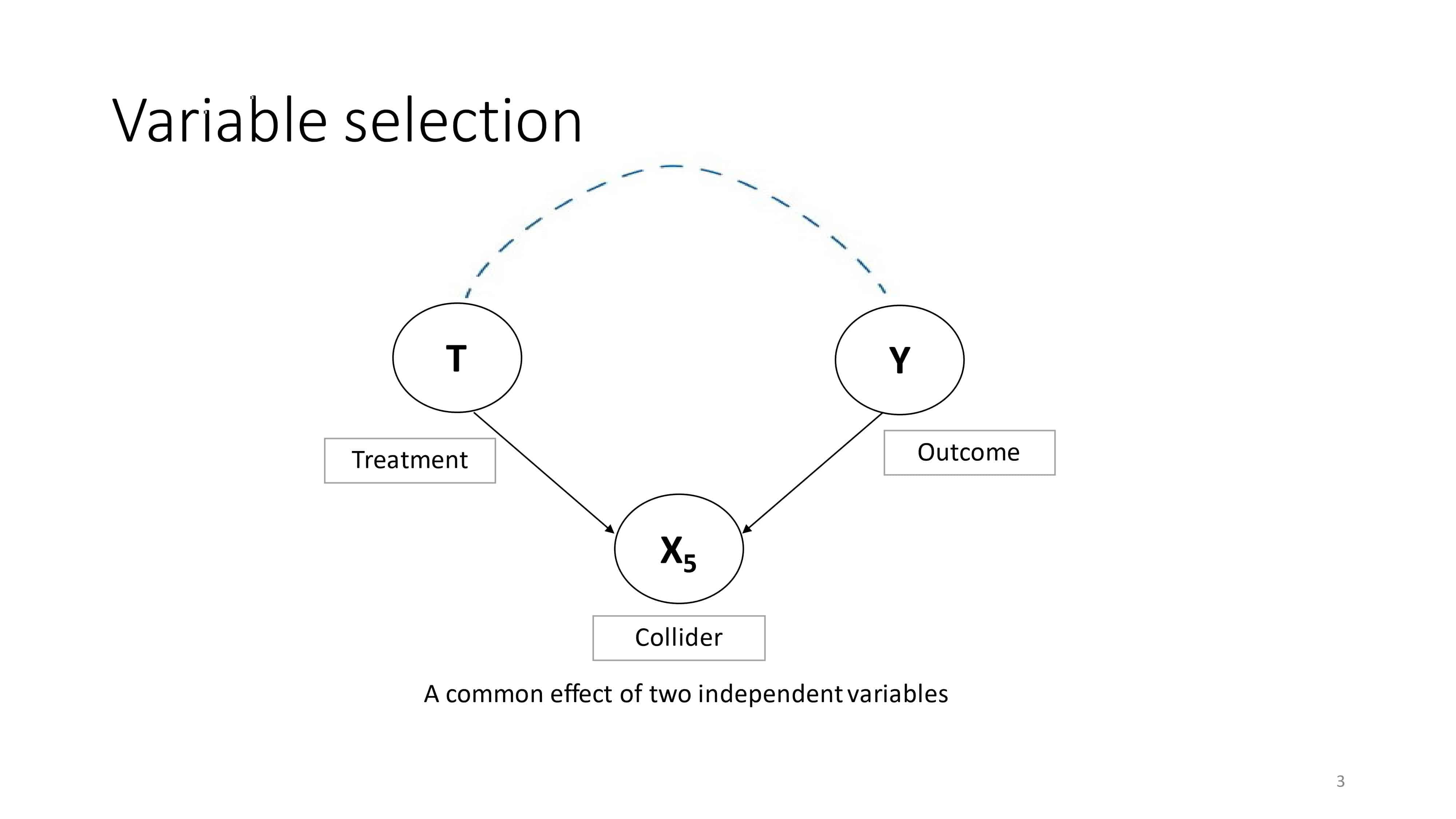
A collider is a common effect of two independent variables (caused by both the exposure and the outcome). It’s not recommended to include colliders in propensity score estimation or in modeling the exposure-outcome relationship with regression as this will open a back-door between the exposure and the outcome (i.e., it will create an artificial association of the exposure and the outcome).
For further reading on variable selection, we recommend the following article 5.
Variable selection for propensity score models.
Brookhart, Schneeweiss, Rothman, et al.
Directed acyclic graphs of covariate selection